Showing posts with label engage. Show all posts

Monday, October 13, 2014

Wanna Play?


Escape the Room Games

There are many different types of game genres. Today I focused on Escaping the Room Games. These types of games are played by pointing and clicking around the screen to explore a world of your choice. The main task you are trying to full fill is to help your character by reading the pop ups directing you what to do and clicking around to find items or trigger actions.


The game I chose to play is called Phantasy Quest.  I played the game 2 different times for about an hour and then for 45 minutes. If you like this game comes with an option of using a walkthrough to aid you in the game.

The main plot of this game is you are stuck on a deserted island (well it seems that way at first). You are given no back story at first and you start on the beach by yourself and you are able to click arrows to move around the island. As you play you start to figure out information about how you got there and you learn that you are maybe not alone. As you move around you pick up items and use them to complete small tasks by taking them out of your inventory and clicking them on things in hopes an action will occur.

Here is a description of how to play the game from the website itself:
Use your mouse! Just click anywhere on the game screen. Some things you can activate simply by clicking on them, while others you may have to use an item that you have collected in your inventory.
To use an inventory item, move the pointer over it, click and while holding the mouse button, drag the item out of the inventory bar onto the game screen, then release the button. The item should then move with your cursor, and you can click it on things in the game screen. To put the item back in your inventory, just click it on the inventory bar.

 I found this game fun and quite addicting. It followed an easily hookable storyline and I wanted to keep following it to find out what was going to happen next. Once I found the gate I really wanted to get inside and figure out why I was stranded on this island! I found myself playing the game for longer than I wanted instead of doing other homework, oops! I think there are plenty of performance indicators that can be included with this game.

  • Problem solving is a great performance indicator. Students must analyse their actions and what they want to do next as well as anticipate consequences. Students can discuss with each other game strategies and why one thing must be completed before another and use reasoning to back it up. To assess this indicator the teacher could place bench markers in the walkthrough where students will stop to anticipate consequences and discuss with their partners what they should do next. 
  • Storytelling can be used to retell the story using sequencing vocabulary. They could use the game as an inspiration to write a narrative. This would be a great time to use images from the game to help prompt specific points in the game so students can write about them using sequencing. The teacher can then assess the sequencing to see if it was similar to the game and note the rationale behind it.

 I would use a walkthrough with this game because with the use of the walkthrough the students can follow the directions and follow the sequencing. This will allow them to continue with the game even if they are confused. Then the teacher will be a helper and can help aid them with what to do next but the walkthrough will help them out the most. Though the teacher can also ask thought provoking questions about why would we need to push the rock off before we entered the gate? This will make students actively think about the walkthrough while they are reading it and anticipate further sequencing according to the feedback the game gives them.

Gamif-what-ion?


Now, what exactly is "gamification? Well according to 7 Things to know about Gamification, gamification is when there is a application of game elements in a non-gaming situation. These elements often motivate or influence behavior in a classroom.

According to this article there are 7 important things you should know about Gamification:
1. Gamification elements often motivate and influence behavior
2. Competition will spur students' concentration and interest to lead to more effective learning
3.Used in higher ed. but adaptable to many
4.Helps build connections among by drawing in shy students, supporting collaboration, and engaging interest in course content that might have no otherwise.
5. But there are downsides: it can be difficult to employ effectively
6. If it is properly supported it can really be of use and grow!
7.Implications?: Offers instructors numerous creative opportunities to enliven their instruction.

I think the scenario is very intriguing in this article. I know that I would love to participate in an activity like this in a class and I would also learn a lot from it in the process. Personally I have used an idiom game where students must find native speakers of English and ask them what the idiom they have means and to use it in a sentence. I awarded points to the students for achieving this goal quickly and in ranking order. This gave incentive to the students and they found it fun, like a game. I really want to discover ways that gamification can be applied specifically to the ESL classroom.

In order to gain clarity on what exactly games do to engage students I read Sculpting Flow and Fiero: Daily MTG. I think the most interesting points of this article is about flow and fiero. So, what is flow? Flow is displayed in the moments where the challenges we face match up almost exactly with our ability to overcome them.
The psychologist Mihaly Csikszentmihalyi defines it as "the satisfying, exhilarating feeling of creative accomplishment and heightened functioning."  Csikszentmihalyi found that there were three factors essential to making flow: clear goals, rigidly defined rules of engagement, and the potential for measured improvement in the context of those goals and rules.

So, now that we understand flow, what exactly is Fiero? According to Dr. McGonigal, fiero is "possibly the most primal rush we can experience." It's the feeling we get when we conquer an obstacle that, for whatever reason, is emotionally important to us.  McGonigal describes it as "a craving for challenges we can overcome, battles we can win, and dangers we can vanquish."


These strong emotions and feelings are what tie us to these games, make them engaging and intriguing.


Now that we know the benefits of gamification how can we include them in out classroom?!
Well, luckily there is an article called 10 Gaming Genres to Adapt to Class. This is a lovely resource of ten gaming genres and how they could be used in the classroom.

The three I found the most interesting and want to use in in the classroom are as follows:

5. "Strategy Games- This is a game in which the gamer is presented with a number of possible choices in game play which will effect how they progress in the game...With these games students can practice activating prior knowledge, making inferences, and predictions."

6. "Adventure Games- Adventure games are a sub genre of point and click games but usually differ in that the game has got strong narrative elements. There is usually a central character, a storyline, objectives to be achieved, an enemy and an outcome at the end".
These types of games can be used in replacement of books! They have all of the same aspects of a novel and then students can apply literary elements to them.

8. "Massively Multiplayer Online Role Playing Games (MMORPGs)- Is a computer role playing genre in which a massive number of players interact with one another within a fictional virtual world. The player assumes the role and takes control of the actions of a fictional character."
These types of games are great for working on collaboration and cooperation As well as handling money and peer relationships.

All of these are great ways to engage students while still meeting standards and teaching students skills.

Monday, October 6, 2014

Twitter in the Classroom!

What exactly is Twitter?


According to Twitter in the K-8 Classroom- Globally Connected Learning, teachers can use Twitter to introduce students to the connected world of a learning network. Students should make a profile with an avatar and a detailed bio stating their age and purpose of using the twitter. Also, privacy settings are important! You can make your tweets public or you can change it that only people you approve can see them.

But What can Twitter be used for?!


There are so many ways you can take advantage of Twitter in your classroom! But, make sure to have proper twitter etiquette including being polite, not gossiping, don't plagiarize, and respond to your followers.

Have no idea what to tweet about?! Here are some great suggestions!

But make sure your tweets are quality; are they clear, concise, grammatically correct, and informative. Also make sure to make use of Twitter vocabulary like RT (re-tween), # (hashtag), @ (mention), and DM (Direct Message). All of these tools will make using Twitter in the classroom effective, easy, and fun!


Another site with very useful twitter information is A Must Have Guide On Using Twitter in Your Classroom. This site, I think, is more helpful for teachers who have older students and maybe even college professors.

Here are some of my favorite helpful tips from this website:

  1. Ambient office hours: With Twitter, Howard Rheingold at Berkeley uses Twitter for group contact, which he calls “student-to-teacher-to-student ambient office hours.”
  2. Keep students in the loop: Using hashtags on Twitter, students who were not able to make it to class can follow along and stay on top of the conversation.
  3. Attendance reminders: For students who have trouble making it to class on time, send reminders before school to get them in the door earlier.
  4. Twitter pop quiz: Send out quick quizzes on Twitter, and have them count for bonus points in the classroom.
  5. Parent communication: Parents can sign up to receive tweets from teachers, learning about activities, tests, projects, and more.
  6. Find foreign pen pals: Students can use Twitter to communicate with students in a different country, learning about their hobbies, home, school, and more.
  7. Twitter can improve writing and punctuation: As long as students are held accountable for their grammar, using Twitter offers a great opportunity for improving writing and punctuation.
  8. Communicating with experts: Find authors, scientists, or historians on Twitter and get connected; a great resource for the classroom.
Both of these sites are worth checking out. They make be excited to use Twitter in and outside of the classroom!

Monday, September 29, 2014

Connecting Through Social Networking

A great way to connect and seek informal professional development is through Social Networking. Here are TWO helpful communities I find helpful and informative on google+


The first one is English Language Teaching (ELT). They provide helpful resources, discussions about important topics, tips for Teachers & Learners of English [ELT/EFL/ESL]. Specifically on here are various articles about grammar, geography, participation, and listening skills. As well as worksheets, information about seminars and teaching abroad.


The second community I found helpful is Teachers for Interactive Language Learning (TILL).
This site is great for creative, sharing, and daring individuals interested in helping others learn English as an additional language! This site has some nice inspirational quotes, teachercasts, material suggestions, and job opportunities.


Both of these google+ communities have great resources and opportunities to discuss questions that may arise in the ESL classroom!

Monday, September 15, 2014

Let's Prep Students for their Age, not the Teacher's

Hello There,

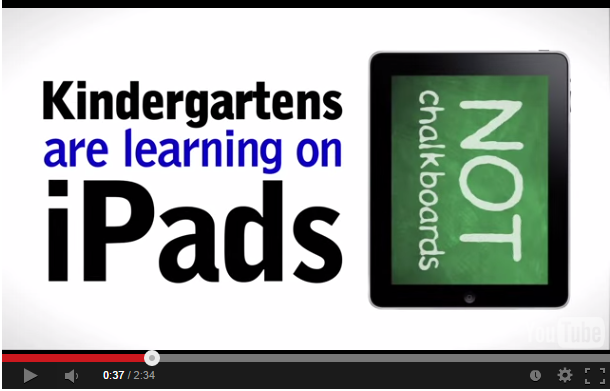
For my Technology class I watched some really interesting videos with an over-arching theme of incorporating technology in the classroom. The following are the highlights from those videos.
Education Change Challenge
This video asked a lot of questions: Why do we think that students will learn in the same way at the same time? Why is education the same it was 100 years ago? The video also made a lot of powerful statements: We need to make students lifelong learners. Teachers need to be relevant and credible in order to understand and meet the generation of students they are teaching.
I think that more of these questions need to be asked and statements be carried out. I know a lot of talk has occured about education reform but I don't think education needs to be "reformed" I think it needs to be completely changed. Reform indicates that it is taking what is already there and changing it a bit, instead it needs a complete overhaul. I think they used a perfect analogy in this video... If a doctor from 1914 was in a 2014 operating room they would be completely lost and be a inadequate doctor, but if a teacher from 1914 came into many 2014 classrooms they would hardly skip a beat.  

Social Media Revolution

I think this video is great at illustrating the changes and effect technology has on our academic and daily lives. It points out the ever growing and influential social medias. It states that over 50% of the population is under the age of 30 years old! Another interesting point was that people trust peer recommendations and only 14% trust advertisements. This video is indirectly stating that we should be embracing technology in our classroom by showing us how important it is to the population as well as how it affects our daily lives.  


A Vision of 21st Century Teachers

 This video is great! It's made by teachers about teachers who use technology in the classroom and the vast benefits it brings to their classroom! Some of the major points they make are how technology helps foster a global community, allows teachers to include differentiated teaching to address the many different types of learning styles, and how technology is aligned with real life. Technology also promotes critical thinking, global interaction, and engage the students. This video is promotes technology in a positive way that will help teachers reach standards while helping students understand and be interested at the same time.


The Future Starts Now

This video is geared toward Norwegians, but it is still relevant to American schools. It is made from a students point of view discussing how ICT (information and communication technology) helps students learn better because they are the most comfortable and enjoy using it but she wants to know why it's not integrated more into the classrooms. She makes the point that learning with technology makes education more relevant and helps students understand what they learn instead of just memorizing facts. I think the most important point she makes is that teachers may the the resources to work with but they don't have the time or professional development to keep their ICT knowledge up to date so they will be able to and comfortable using ICT in the classroom. I think that if schools provided the time and resources for teacher to update their knowledge and materials to be ICT based everyone involved would benefit.